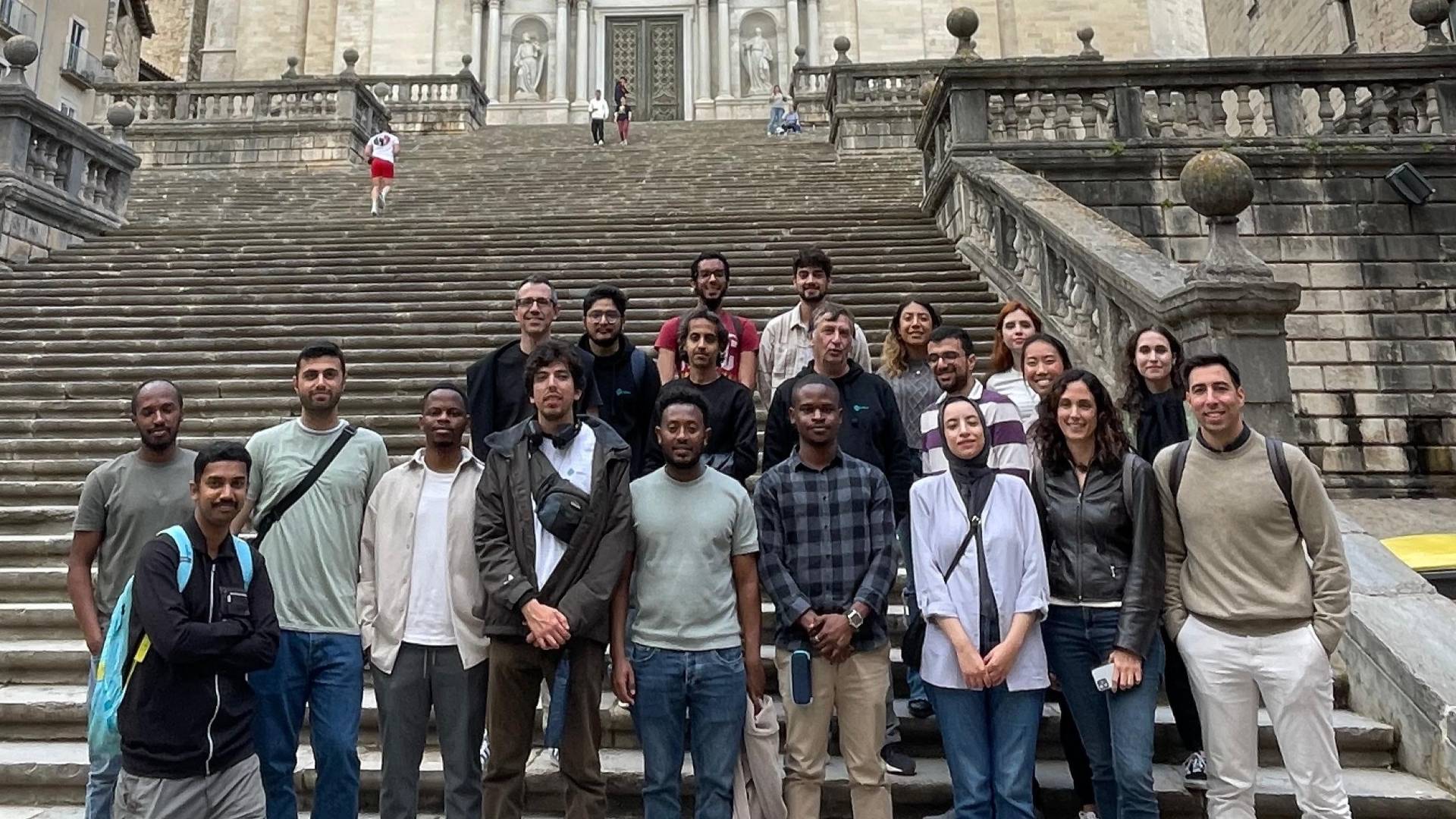
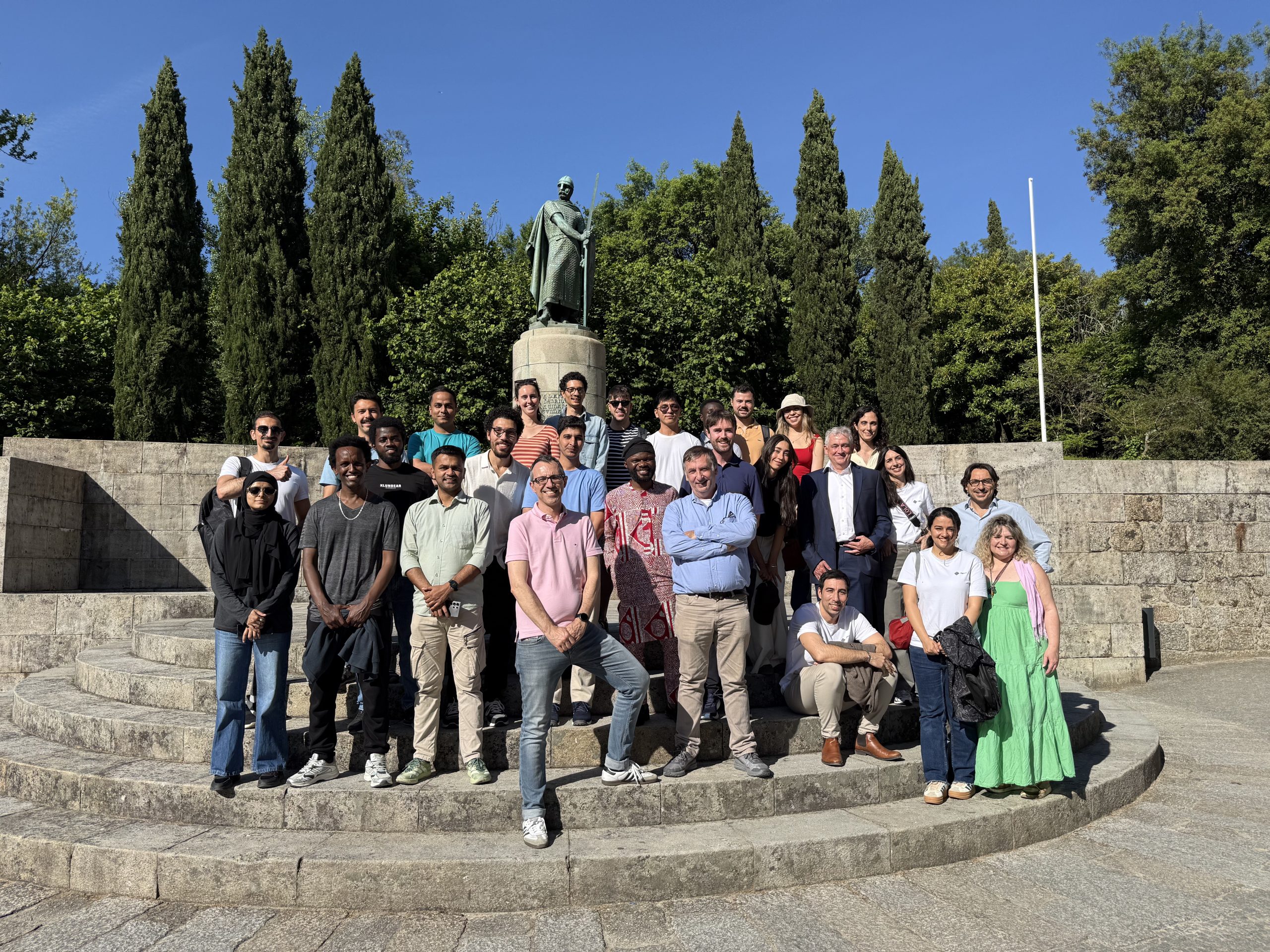
The FRP++ Workshop 2026 brought together students, academic staff, and industry representatives in Guimarães, Portugal, from May 20th to 22nd, 2026, for three days dedicated to research dissemination, industrial engagement, professional development, and networking. Hosted by the University of Minho, the workshop provided MSc students with an opportunity to showcase the progress of their dissertation projects while strengthening connections with experts from academia and industry.
The first day focused on MSc dissertation pitches, offering students a platform to present their ongoing research and receive feedback from supervisors and peers. Organized into three thematic sessions — Sustainable Materials & Circular Economy, Infrastructure Repair & Structural Strengthening, and Advanced Mechanics, AI & Damage Modelling — the programme highlighted the diversity of research being developed within the FRP++ consortium.
Topics ranged from the optimization and repurposing of wind turbine blade waste, life cycle assessment of construction materials, and 3D-printed composite structures, to FRP strengthening solutions, composite repair techniques, AI-based durability prediction, and advanced material characterization. Throughout the day, students demonstrated both technical excellence and their ability to communicate complex engineering concepts and engage in scientific discussion.
The academic programme was complemented by a guided visit through the historic city of Guimarães. Participants explored the UNESCO World Heritage Historic Centre, the historic Couros district — renowned for its centuries-old leather tanning and dyeing tradition — and the Palace of the Dukes of Braganza, discovering the rich cultural heritage of Portugal’s birthplace.
The second day shifted the focus towards industrial perspectives and practical applications of composite materials. The morning began with a keynote lecture delivered by Professor Eric Moussiaux (Exel Composites / Free University of Brussels, Belgium). Drawing on more than four decades of experience in the composites sector, Professor Moussiaux shared valuable insights into the evolution of composite materials, industry innovation, and the future challenges and opportunities facing the sector.
The programme continued with a visit to the University of Minho Structural Laboratory (LEST), where participants explored advanced experimental facilities and took part in hands-on non-destructive testing (NDT) activities. In the afternoon, the group travelled to Viana do Castelo for a technical visit to the ENERCON wind turbine blade manufacturing plant, gaining firsthand insight into large-scale composite production and its role in the renewable energy sector.
The day concluded with a visit to Santa Luzia Hill, offering panoramic views over Viana do Castelo and the offshore WindFloat project, one of Europe’s pioneering floating wind energy initiatives. A social dinner later in the evening provided an opportunity for informal networking and discussions among students, lecturers, and industry representatives.
The final day focused on professional development and career opportunities. The morning opened with the soft skills seminar Communication is not just talking, delivered by Doctor Elisabete Teixeira (University of Minho, Portugal). Through practical examples and interactive discussions, students reflected on the importance of communication in research, leadership, stakeholder engagement, and career development, exploring how effective communication extends far beyond simply speaking.
The workshop concluded with the FRP++ Job Fair, designed to bridge the gap between academic preparation and professional practice. Representatives from Politechnika Rzeszowska, ENERCON, Exel Composites, The LRC, and PIEP introduced their organisations, presented career opportunities, and engaged directly with students through networking sessions.
The Closing Ceremony marked the end of three rewarding days of learning, collaboration, and knowledge exchange. By combining scientific presentations, industrial visits, professional skills development, and networking opportunities, the FRP++ Workshop 2026 successfully fulfilled its objective of providing students with a comprehensive learning experience that extends beyond the classroom.
The workshop once again demonstrated the value of bringing together academia and industry while fostering an international community of future engineers and researchers. Through technical discussions, professional interactions, and shared experiences, participants strengthened their understanding of advanced composite materials and reinforced the collaborative spirit that lies at the heart of the FRP++ programme.
A full description of the programme can be found in the event booklet: HERE